Agentic Workflows: The Tutorial to Building AI Systems
A clear starting point to learn how real AI workflows are designed, tested, and safely used.

AI starts becoming useful when it moves from answering questions to helping complete work.
That is the real shift behind agentic workflows.
It is not about giving a chatbot a bigger prompt.
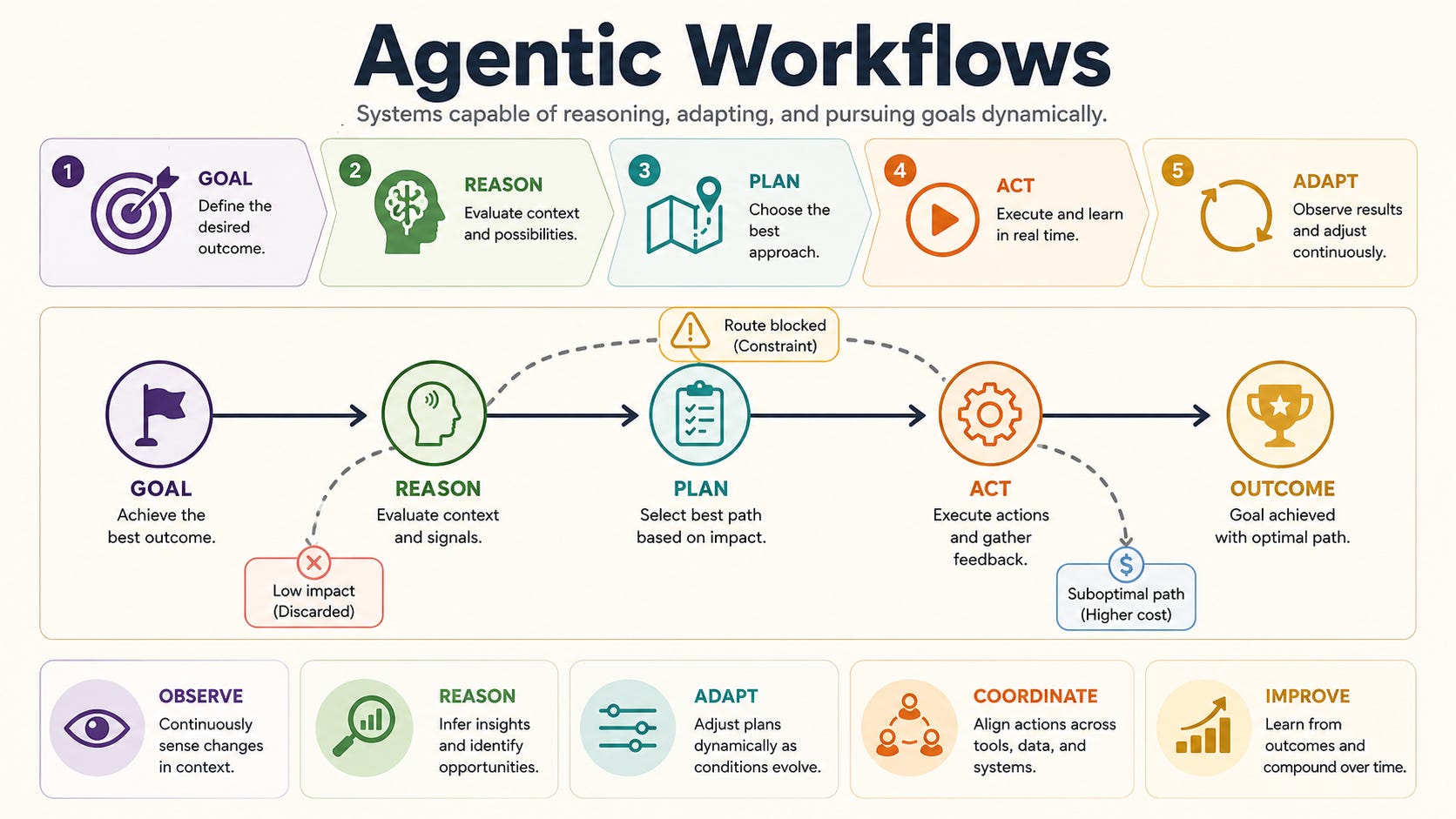
It is about designing a system where AI can understand a goal, use tools, make small decisions, check the result, and move the work forward.
This is why agentic workflows matter.
They are not just another AI term. They are a new way to organize work around AI.
A normal automation follows instructions.
An agentic workflow follows a goal.
That one difference changes the whole design.
The simple way to understand it
A normal workflow works like this:
If this happens, do that.
For example:
A customer fills out a form.
The system creates a CRM record.
It sends a welcome email.
It creates a follow-up task.
That is useful. But it is still fixed.
The system is not thinking. It is only following the path you already gave it.
An agentic workflow works differently.
You give the system a goal, tools, context, and boundaries.
Then it decides what steps are needed.
For example:
A new business lead fills out a form.
The agent reads the message.
It checks the company website.
It understands what the business does.
It decides if the lead is serious.
It recommends the right service.
It drafts the proposal.
Then a human reviews it.
This is no longer just data moving from one app to another.
Now the system is doing some of the thinking work between the steps.
That is the value.
