Kimi K3 Complete Guide: The Open-Source AI Model That Just Beat The Fable
How to use Moonshot’s new model for websites, large coding jobs, research, documents and long-running AI work


Kimi K3 did not kill Claude.
But it did kill one very comfortable story.
For years, we were told that the strongest AI models had to remain closed, expensive and controlled by a small group of companies. Builders could use them, but only through a paid gate. The company decided the price, the limits and what the model was allowed to do.
Then Kimi K3 arrived.
On its first day, it entered Arena’s Frontend Code leaderboard at number one with 1,679 points. Claude Fable 5 scored 1,631. GPT-5.6 Sol scored 1,618. The older Kimi K2.6 was sitting at number 18.
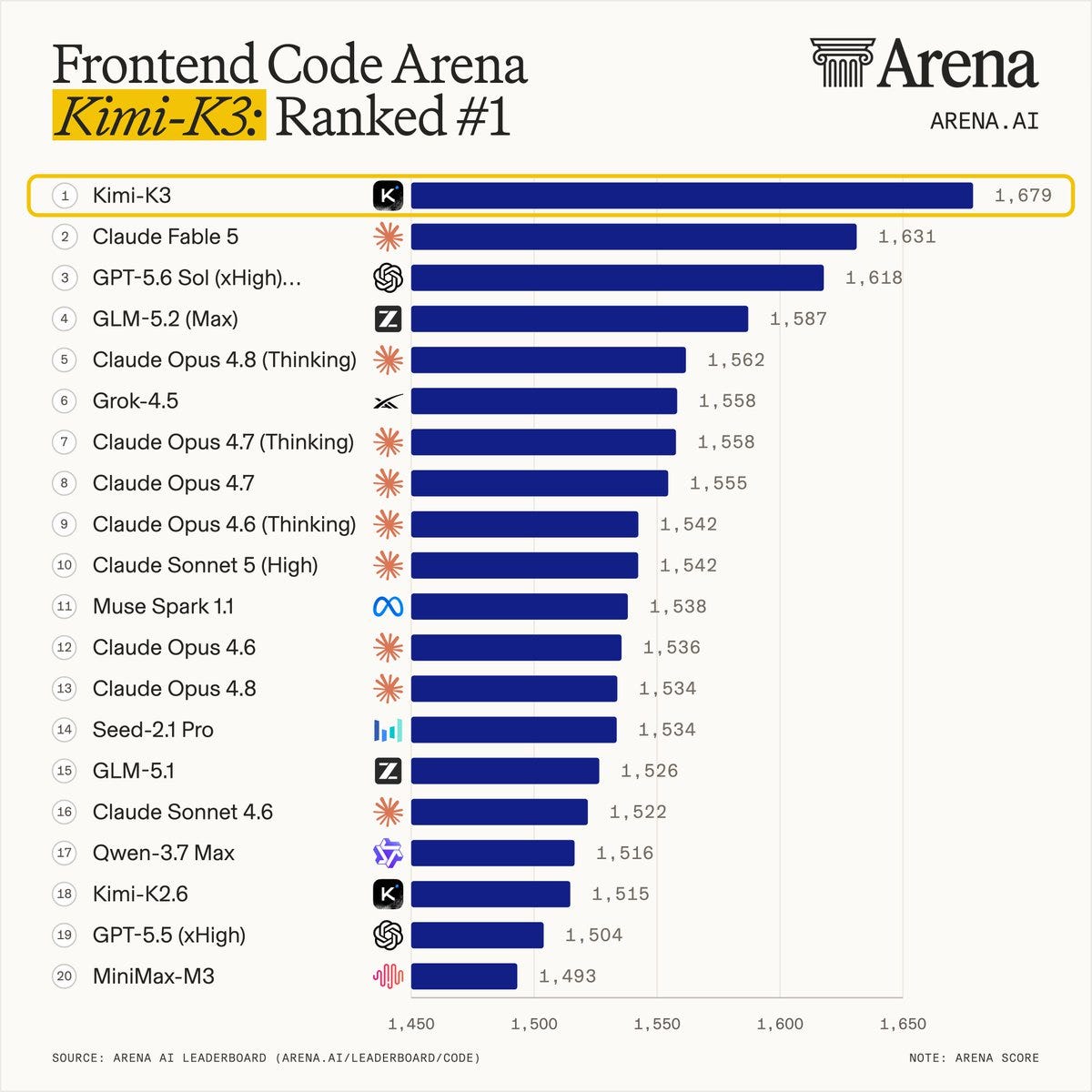
Moonshot moved from number 18 to number one in a single release.
That is not a small upgrade. It is a warning shot.
K3 also ranked first in six of the seven frontend categories tested. It only finished second in gaming. These were not private scores shown inside Moonshot’s own launch presentation. The main ranking came from blind human voting on Arena, although the score was still marked as preliminary when this guide was written.
The bigger point is not that Kimi won one leaderboard.
The bigger point is that a model with frontier-level coding, one million tokens of memory, vision, tool use and promised public weights can now compete directly with the best closed models.
The old gate is starting to crack.
This is not another chatbot for small questions
Kimi K3 has 2.8 trillion total parameters.
That number sounds impossible to understand, so forget it for a moment.
Think of K3 as a very large company with 896 expert departments. It does not wake up every department for every job. It chooses 16 experts for each part of the task.
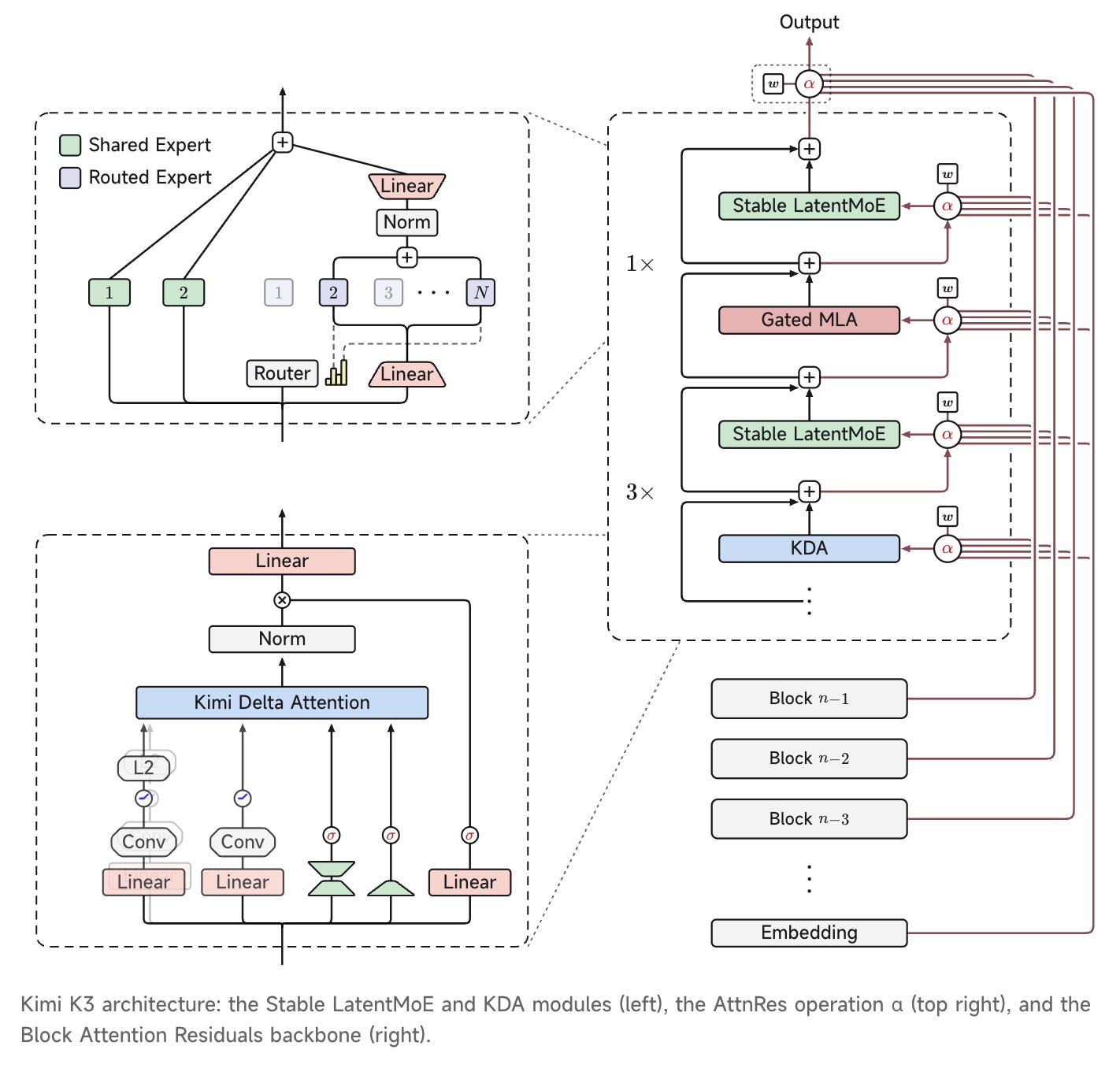
This design is called Mixture of Experts.
It gives the model a huge amount of stored knowledge without using the full 2.8 trillion parameters at the same time. Moonshot also added two systems called Kimi Delta Attention and Attention Residuals. Their job is to help the model follow information across very long files and very deep reasoning steps.
In plain language, K3 is built for work like this:
Reading a complete software project.
Building a website from a screenshot.
Working inside a terminal for several hours.
Reading a large collection of reports.
Writing, testing and repairing code.
Turning research into charts, websites or presentations.
Keeping a long project history without forgetting the early instructions.
It is not mainly built for “write me a short email” or “summarize this paragraph.”
It can do those jobs, but using K3 for them is like starting a large truck to carry one shopping bag.
Inside the full guide: how to use Kimi K3 in the browser, terminal, API and Claude Code, the exact prompts and setup that get better results, three practical workflows for websites, large codebases and document research, how to use its one-million-token context without wasting money, where K3 beats other models, where it still falls short, and whether it is actually worth adding to your AI stack.
