Loop Engineering: Why Every AI Engineer is Learning it
You should not be prompting coding agents anymore. You should be designing loops that prompt your agents

In the video, Boris Cherny says the line that explains the next layer of AI coding:
“I don’t prompt Claude anymore. I have loops that are running. They’re the ones prompting Claude and figuring out what to do. My job is to write loops.”
That sounds small until you try it.
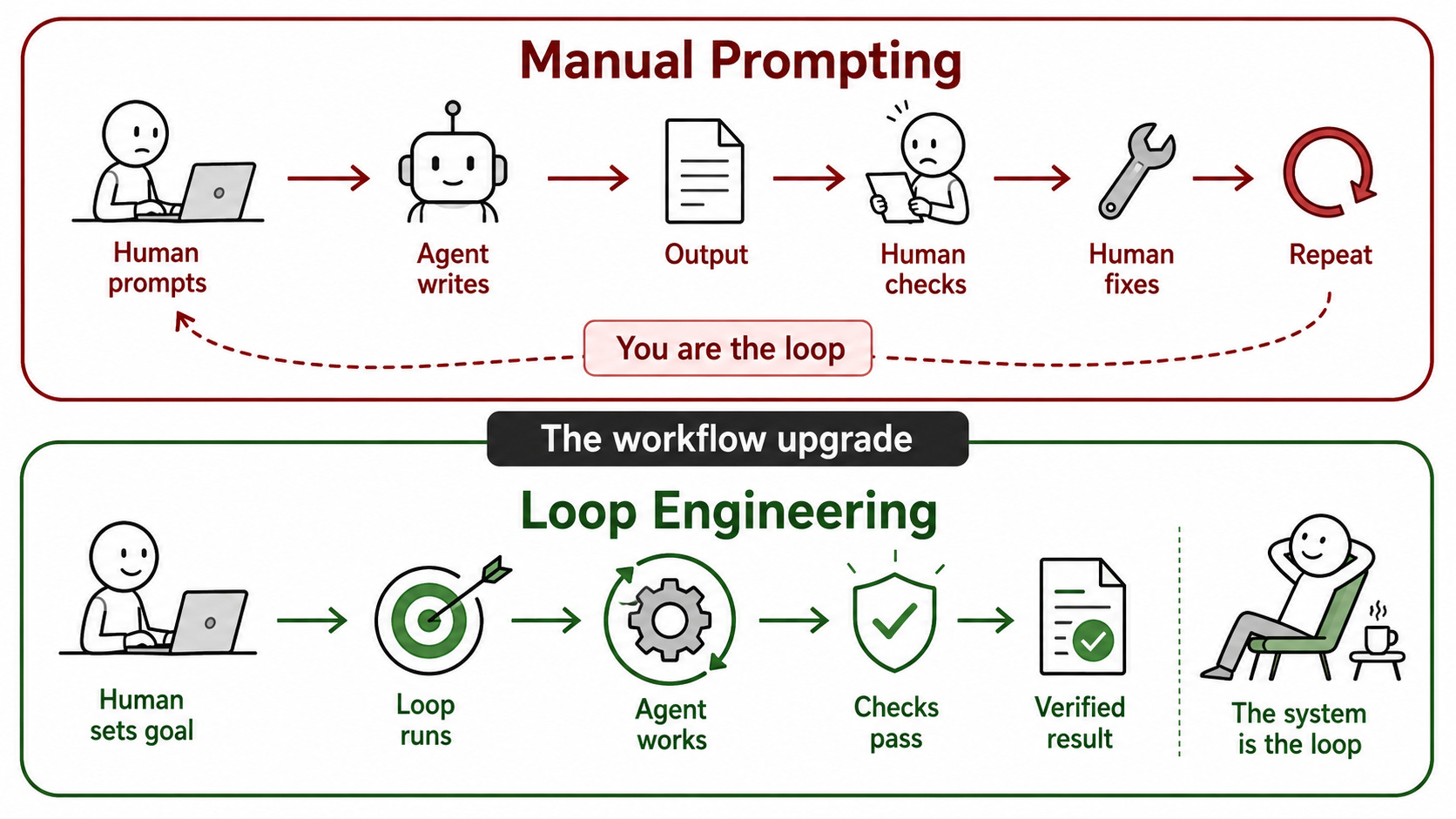
It means the human is no longer sitting there as the middleman between the agent and the terminal. The human writes the system that gives the agent a goal, lets it work, checks the result, and sends it back again if the work is not good enough. Boris is talking about moving from “prompting Claude” to designing the machine that keeps Claude working.
A few days later, Peter Steinberger put the same idea in one sentence:
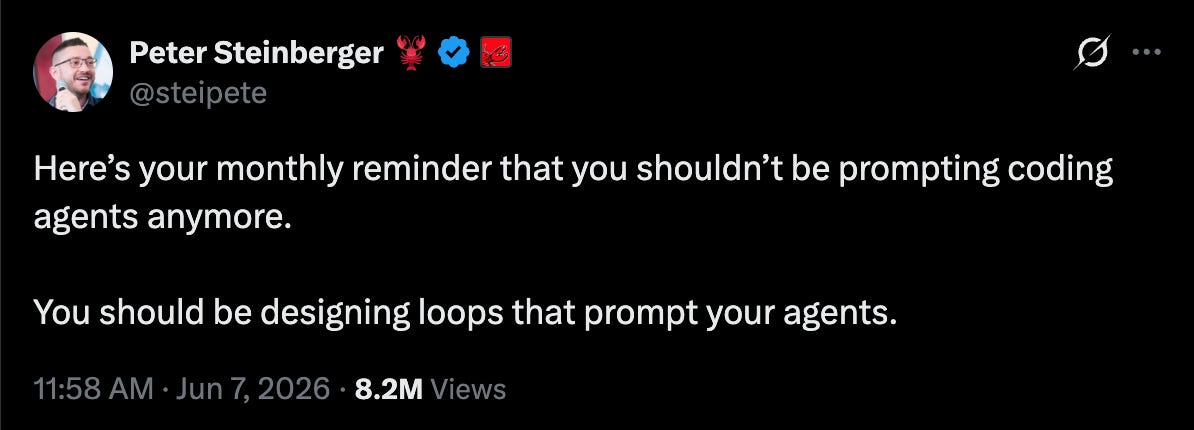
You should not be prompting coding agents anymore. You should be designing loops that prompt your agents.
That is LOOP Engineering.
Not better wording.
Not a magic prompt.
Not “AI will build everything while you sleep.”
It is a practical setup where the agent moves through this cycle:
Discover → Plan → Execute → Verify → Iterate
If verification passes, it stops.
If verification fails, it tries again.
That one difference changes the whole workflow. A prompt gives an agent a task. A loop gives an agent a job with a standard.