Managed Agents Are Changing How We Build AI Agents
A practical guide to building cloud agents that can run for hours, use tools and skills, remember past work, control costs, and coordinate with other agents.

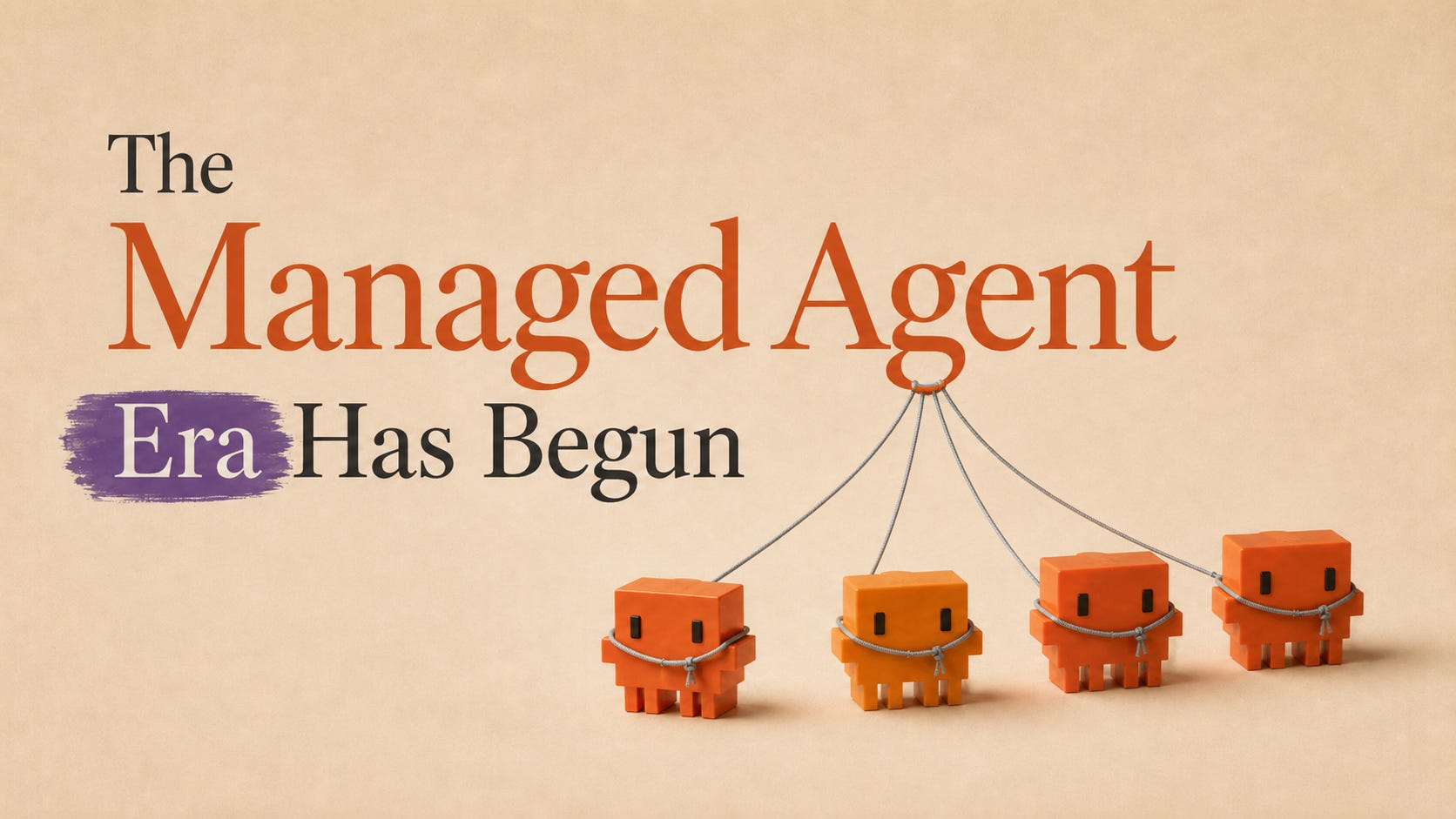
On August 7, Anthropic added four things to Managed Agents at once: hard spending limits, advisor models, inference-location controls, and automatic loading of Skills from GitHub repositories. Four months earlier, Managed Agents had only just entered public beta.
These do not sound like normal model upgrades.
They sound like pieces of an operating system for AI workers.
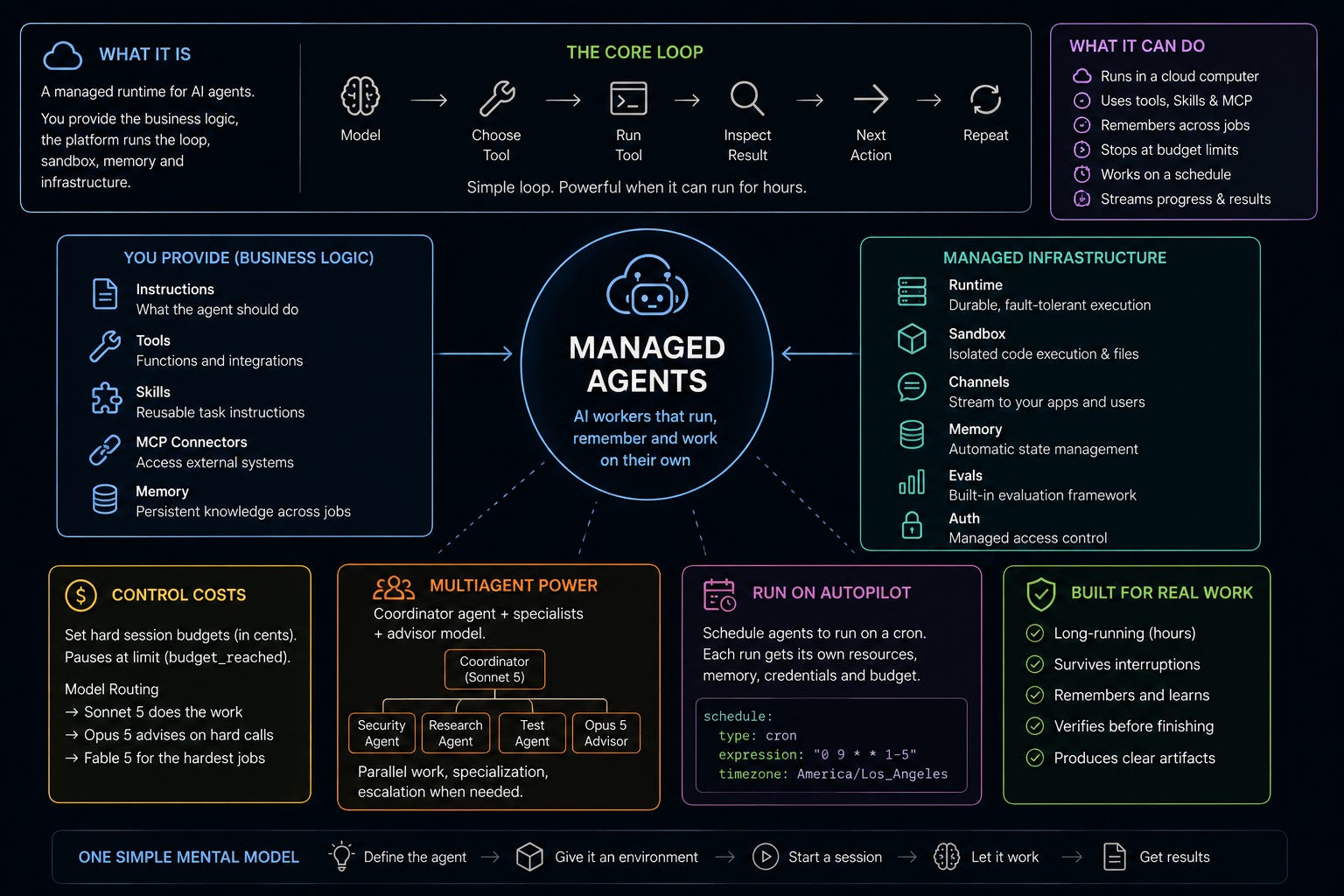
An agent can now start inside a cloud computer, read and edit files, run commands, browse the web, call MCP tools, remember information across jobs, bring in another agent when the work gets difficult, stop itself at a spending limit, and wake up again tomorrow on a schedule. You are no longer responsible for keeping the loop, container and worker alive.
That is the interesting part of Managed Agents.
The model is still important. The machine around the model is becoming a product.
The agent loop is leaving your laptop
A basic agent is surprisingly simple:
Model → choose tool → run tool → inspect result → choose next action → repeat
Claude Code, coding agents and many research agents are built around some version of that loop.
The difficult part starts when you want the same agent to work for six hours, survive an interruption, safely execute code, remember yesterday’s job, use company credentials, run every morning, stream progress to an application and let several specialist agents work together.
Until recently, you built much of that machinery yourself.
Managed Agents move it into the runtime.
Anthropic describes four core objects: Agent → Environment → Session → Events. The agent contains the model, instructions, tools, MCP servers and Skills. The environment is the computer it works inside. A session is one running job. Events are how your application talks to it and watches the work.
This also explains what should not disappear. The managed layer is good at running the machine: sandboxing, sessions, execution, events and orchestration. Your own layer should still decide what good work means, what needs verification, what information is private and when something is actually finished.
That split is becoming one of the most useful ideas in agent building.
Inside the full guide: the exact Managed Agent setup, CLI commands, budget controls, memory, Skills, multiagent orchestration, advisor models, scheduled runs, graph-style workflows, security trade-offs, and the practical path from one cloud agent to a reliable autonomous worker.
